

This Green Earth is a weekly, hour-long program that focuses on the environment and environmentalism. Host Claire Wiley explores the science, politics, economics and ethics behind the environment, natural resources and sustainability.


This Green Earth includes interviews with local and national experts in the fields of water resources, air quality, environmental policy, fossil and renewable fuels, climate, conservation, ecosystems, agriculture, aquaculture and sustainability.
Claire Wiley is an award-winning broadcast journalist. This Green Earth's mission is to educate listeners about the importance of environmental preservation, conservation and stewardship.
This Green Earth is sponsored by:
For questions and inquiries, or to inquire about appearing on the show, contact the hosts directly at thisgreenearth@kpcw.org.
-
 Explore the wonderful world of plants and trees and our human relationships with them with literary and cultural studies scholar Dr. Solvejg Nitzke.
 -
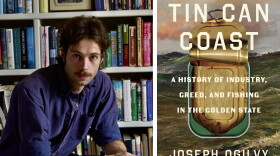 Explore the ecological history of food with chef and author Joseph Ogilvy.Ogilvy has just penned a new book titled "Tin Can Coast: A History of Industry, Greed, and Fishing in the Golden State."
 -
 Denise Peterson, wildlife filmmaker and Founder and Director of Utah Mountain Lion Conservation joins the program to share more about her organization and the threats that are currently facing Utah’s mountain lions.
 -
 Summit County Food Rescue Coordinator for Wasteless Solutions, Lo Bannerman, shares strategies to help build a better infrastructure for our local food systems. to not only reduce waste, but help serve nourishment to our community.
 -
 Utah Project Manager for Wildlands Network, Kasey Windstorm, joins the program to share more about the organization and the policies and project initiatives they are working on across the state.
 -
 Chemical biologist, conservation leader and National Geographic Explorer Dr. Rosa Vásquez Espinoza discusses her work protecting wild pollinators and the Amazon. Dr. Espinoza has just released her book titled, The Spirit of the Rainforest.


-
 Chef and author Joseph Ogilvy explores the tangled human and ecological history of food and his new book, "Tin Can Coast: A History of Industry, Greed, and Fishing in the Golden State." Literary and cultural studies scholar Solvejg Nitzke explores the weirdly wonderful world of ferns—ancient plants that outlived the dinosaurs, sparked a Victorian obsession and continue to captivate us today.
 -
Claire and Seth speak with Lo Bannerman, Summit County Food Rescue Coordinator for Wasteless Solutions. Lo is helping building a better infrastructure around our food system to not only reduce waste, but help serve nourishment to our community.Then, Denise Peterson, wildlife filmmaker and Founder and Director of Utah Mountain Lion Conservation joins the program. We’ll learn about Denise, the organization and threats currently facing Utah’s mountain lions.
-
On today's episode of "This Green Earth," chemical biologist, conservation leader and National Geographic Explorer Dr. Rosa Vásquez Espinoza shares her work protecting wild pollinators and the Amazon.Then, Kasey Lindstorm, Utah project manager for Wildlands Network, shares more about the organization and the policy and initiatives created to study, restore and maintain large-scale habitat connectivity in the West.
-
Marine ecologist, Eliza Heery talks us through her extensive research exploring urban seascapes and the creatures that inhabit them and then environmental scientist, Dr. Shahir Masri, discusses the experiences that led to writing his book, On the Road for Climate Action: A Story of Science, Activism and an American Adventure.
-
Anthropologist and former hotshot wildland firefighter, Jordan Thomas discuss his new book titled, "When It All Burns: Fighting Fire in a Transformed World" The book provides a gripping firsthand account of a record setting fire season. (0:53)Then, as Lake Powell shrinks, something remarkable is happening beneath the waterline. Eric Balken of the Glen Canyon Institute discusses the surprising ecological rebirth unfolding in Glen Canyon and what it could mean for the future of the Colorado River. (30:18)
