

Seth Arens
Co-Host This Green EarthSeth Arens joined the Western Water Assessment in December 2015 as the Utah Research Information Specialist. He brings a multidisciplinary scientific background that includes ecosystem and plant physiological ecology, snow hydrology, atmospheric science and air quality research.
Before joining Western Water Assessment, Arens worked as an environmental scientist for the Utah Division of Air Quality from 2010 to 2015, where he developed a research program focused on understanding the causes and extent of ozone pollution in Utah and helped maintain the state’s air quality monitoring network.
Prior to his work in Utah, Arens studied how weather patterns influence ecosystem structure and carbon balance in Arctic environments, conducting research in both Alaska and Greenland. His work has focused on the intersection of climate, atmosphere, water and ecological systems across a wide range of environments.
Arens earned a bachelor’s degree in biology and environmental policy from Colby College, a master’s degree in biological science from University of Alaska Anchorage and a master’s degree in biology from University of Utah.
-
 Emory University biologist Dr. Jaap de Roode explains how civilization and medicine are not strictly human inventions and how ants, apes and other animals heal themselves. Then, explorer, author and sustainable food systems specialist Ryan Huling shares the intricate geographies and hidden societies of the natural world.
 -
 Embark on a global travelogue with explorer, author and sustainable food systems specialist Ryan Huling.
 -
 Long before human medicine existed, animals were already using nature's pharmacy to treat their own illnesses.
 -
Ornithologist Dr. Benjamin Van Doren explores the incredible plight of migratory birds.Then, award-winning media executive and Mountain Towns 2030 board member, Anna Robertson, previews the upcoming Summit in Sun Valley, Idaho.
-
 Ornithologist Dr. Benjamin Van Doren explores the incredible plight of migratory birds.
 -
New York Times best-selling author and former forester Peter Wohlleben discusses the science behind the hidden connections between trees and forests, explored in his book “The Hidden Life of Trees”. Then, Claire and Seth look at the future of sustainable housing in Summit County through a local partnership between Utah Clean Energy and Habitat for Humanity of Summit & Wasatch Counties.
-
 New York Times best-selling author and former forester Peter Woolleben, shares insight on the complex communication and interconnectedness of trees in forests.
 -
Chef and author Joseph Ogilvy explores the tangled human and ecological history of food and his new book, "Tin Can Coast: A History of Industry, Greed, and Fishing in the Golden State." Literary and cultural studies scholar Solvejg Nitzke explores the weirdly wonderful world of ferns—ancient plants that outlived the dinosaurs, sparked a Victorian obsession and continue to captivate us today.
-
 Explore the wonderful world of plants and trees and our human relationships with them with literary and cultural studies scholar Dr. Solvejg Nitzke.
 -
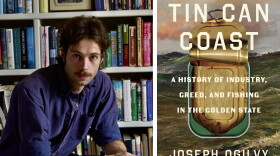 Explore the ecological history of food with chef and author Joseph Ogilvy.Ogilvy has just penned a new book titled "Tin Can Coast: A History of Industry, Greed, and Fishing in the Golden State."


