

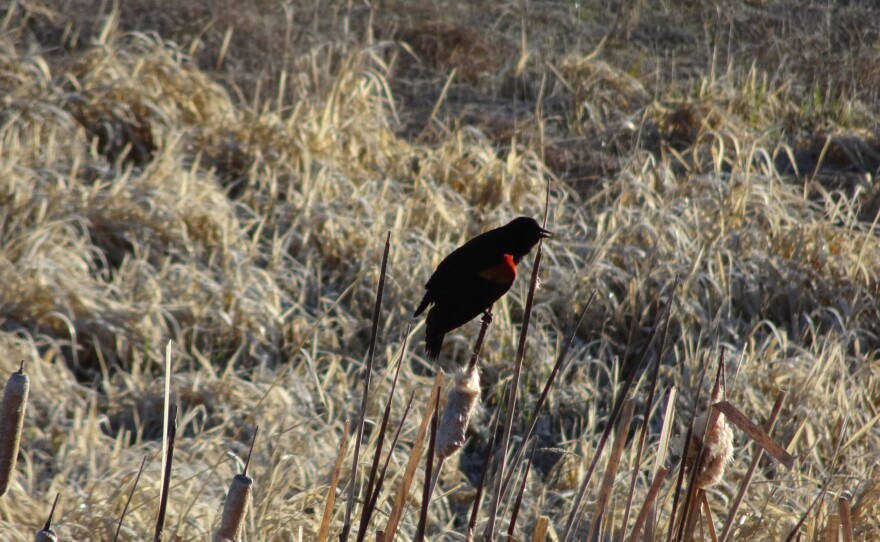
The Marsh Wren, the Cliff Swallow, the Wilson’s Snipe, the Sandhill Crane: those are just a few of the 163 species observed and recorded by birders at the Swaner Preserve’s EcoCenter in the past month.
Ninety-six species have been observed at the Spring Creek Trailhead, another birding hotspot.
It’s a sign of spring, says Swaner’s director of conservation, Rhea Cone.
“This time of year, there is something new on the preserve every day with migrations and new species that we're spotting across Summit County,” said Director of Conservation Rhea Cone. “Some of these birds use the preserve as a kind of refueling pit stop.”
Others will nest on the preserve for the summer months, breeding and hatching eggs.
The preserve tracks species using eBird, a web platform and worldwide citizen science project managed by Cornell University. Cone says new species frequently appear in the area:
“There's always a possibility of seeing what we call vagrants: lost birds, basically, that took a wrong exit on their migration journey, and they showed up at the preserve,” Cone said. “A lot of our neighbors are really excellent birders, and let us know about interesting sightings that they're seeing. And sometimes it's just a chance [that you'll see a new bird].”
Utah’s record warm winter has given way to an early spring, but impacts to bird migrations have been subtle, said Cone. Many species use multiple factors, including length-of-day, to time their migrations.

Local flora, however, are responding differently.
“What I'm seeing most dramatically is plants greening up, things almost going into bloom,” Cone said. “I started seeing some petals on our golden currants last week, and normally that's not something that we see until later in the month or in early May. So that's pretty wild to me. The plants are really responding dramatically.”
Despite dramatic shifts in weather and seasonal patterns over the past few years, Cone says many changes are happening gradually. She encourages those interested in observing a changing landscape to keep a journal.
“Writing observations down, I think, is really important...I hear from a lot of people about all kinds of natural phenomena, like: ‘Oh, it's never snowed this time of year.’ Or, ‘the leaves have never changed this early, this late, this vibrantly,’” she said. “Actually writing these things down and keeping a nature journal is really helpful for marking when these things occur normally and it often reveals more of a gradual change over time, even though we do have some weird years like this one.”
Cone notes the spring is a critical breeding and nesting period for species on the preserve, and members of the public should refrain from feeding or disturbing wildlife.
The Swaner Preserve and EcoCenter is a financial supporter of KPCW.