

Roger Goldman
KCPW co-host, former board chairRoger is a retired partner in the international law firm of Latham & Watkins. He is the co-founder and Chairman of Buildable Hours, a nonprofit group that organizes law firms to build homes with Habitat for Humanity in several cities around the country. He and his wife Rana Tahtinen enjoy skiing and many of the other recreational activities offered by Park City. He is passionate about KPCW and its important role in our community.
-
 Snyderville Basin Water Reclamation District Executive Director Mike Luers discuses the rising presences of the COVID-19 virus in the Park City area,, Deputy Park City Manager Heather Sneddon previews this week's city council meeting, including a dicussion on repairing or replacing the China Bridge garage and and Heber City Councilmember Morgan Murdock recaps Tuesday's council meeting dicussions on a pickcleball hall and a possible shift in the bypass road route.
 -
 Snyderville Basin Water Reclamation District Executive Director Mike Luers with the latest wastewater analysis that found the rising presence of the COVID-19 in the Park City area, including in Colville and Heber Valley.
 -
 Park City Deputy City Manager Heather Sneddon previews Thursday's council meeting, including discussions on whether the China Bridge parking garage should be replaced or repaired.
 -
 Heber City Councilmember Morgan Murdock recaps Tuesday's city council meeting, incuding a proposal for a private "Pickle Hall" for indoor pickball play, along with retail space and a possible shift in the route for the Heber Valley bypass road.
 -
 New York Times journalist and author Carlos Barragán discusses "The Yahoo Boys" and his four-year investigation into the complex human stories, economic pressures and loneliness behind Nigeria’s online romance scams. Then, Erik Smith, founder and CEO of Salt Lake City-based Board Budder, shares how he turned a kitchen experiment into a growing outdoor brand with a plant-based, PFAS-free ski and snowboard wax designed to perform without leaving harmful chemicals behind.
 -
 Erik Smith, founder and CEO of Salt Lake City-based Board Budder, shares how he turned a kitchen experiment into a growing outdoor brand with a plant-based, PFAS-free ski and snowboard wax designed to perform without leaving harmful chemicals behind.
 -
 New York Times journalist and author Carlos Barragán discusses "The Yahoo Boys" and his four-year investigation into the complex human stories, economic pressures and loneliness behind Nigeria’s online romance scams.
 -
Candidates for the Summit County clerk's job — Democratic incumbent Malena Stevens and Republican challenger Suni Woolstenhulme — square off in a live debate of the issues and their visions for the office and Intermountain Health radiation oncologist, Dr. Joshuah Gruhl talks about the importance of early detection in improving breast cancer treatment outcomes and explains the available services offered at Park City Hospital during Breast Cancer Awareness Month.
-
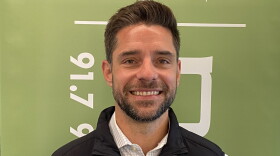 Intermountain Health Dr. Joshuah Gruhl, a radiation oncologist, talks about available cancer screening services at Park City Hospital during Breast Cancer Awareness Month and emphasizes the important of early detection.
 -
Author William D. Cohan talks about his new book, “Money to Burn: The Unvarnished Truth About Leon Black, Apollo and the Rise of a New Wall Street.” Then, veteran bartender and bar owner Dan Warren talks cocktails, his experience behind acclaimed bars in New York and Chicago, and his latest venture, The Parlor, a neighborhood bar in Park City’s Prospector neighborhood.


