

Lynn Ware Peek
Producer/ Co-HostLynn Ware Peek is a longtime voice of Park City, known for her insightful storytelling, science journalism, and community engagement. She joined KPCW in 2008, launching the beloved series Tales from the Wasatch Back, and later served as the station’s Park City beat reporter. Today, she co-hosts and produces two of KPCW’s flagship public affairs shows: The Mountain Life, focused on health and lifestyle, and Cool Science Radio, which brings cutting-edge science and technology to a broad audience.
Beyond broadcasting, Lynn held two distinct roles at Park City Municipal from 2016 to 2022, as a community engagement liaison and as a councilor on the Park City Council from 2018 to 2020. A passionate outdoorswoman, she and her husband Bob have made Park City home for decades, embracing the mountain lifestyle while working to strengthen community ties in the place they met and raised their two sons.
Whether on the airwaves or in civic life, Lynn is committed to making science accessible, storytelling personal, and community feel like home.
-
 Former CIA senior executive Steve Hirsch discusses how intelligence professionals assess emerging threats, from biological risks and food security to cyberattacks and artificial intelligence. He explores how leaders can make sound decisions amid uncertainty and prepare for crises that could affect national security.Then, University of Utah astrophysicist Grace Telford discusses new Hubble Space Telescope findings that reveal unexpectedly weak stellar winds in some of the universe's most metal-poor stars. The research could help explain how the earliest galaxies formed and evolved.
 -
 Former CIA senior executive Steve Hirsch discusses how intelligence professionals assess emerging threats, from biological risks and food security to cyberattacks and artificial intelligence. He explores how leaders can make sound decisions amid uncertainty and prepare for crises that could affect national security.
 -
 University of Utah astrophysicist Grace Telford discusses new Hubble Space Telescope findings that reveal unexpectedly weak stellar winds in some of the universe's most metal-poor stars. The research could help explain how the earliest galaxies formed and evolved.
 -
 National Geographic Explorer and wilderness survival expert Chris Begley shares practical strategies from his new book, "The Emergency Playbook," for staying safe, making smart decisions and keeping calm when disaster strikes.Then, Julia Geisler of the Salt Lake Climbers Alliance uncovers the climbing history of Little Cottonwood Canyon, from pioneering Alpenbock climbers to a trail that traces the legacy of the sport.
 -
 Julia Geisler of the Salt Lake Climbers Alliance uncovers the climbing history of Little Cottonwood Canyon, from pioneering Alpenbock climbers to a trail that traces the legacy of the sport.
 -
 National Geographic Explorer and wilderness survival expert Chris Begley shares practical strategies from his new book, "The Emergency Playbook," for staying safe, making smart decisions and keeping calm when disaster strikes.
 -
 Mark Shelhamer, former chief scientist of NASA's Human Research Program, explores the physical, psychological and engineering challenges of sending humans to Mars. He discusses what we still need to learn about long-duration spaceflight and how preparing for the journey could improve healthcare on Earth.
 -
Park City locals Colleen Logan and Don Roll talk about the newly opened Park City Historic Mine Route. Described as a unique “open-air museum,” the route connects dozens of historic sites for a new way to interact with our mining roots. Then, historian Rachel Greenfield tells how Rose Knox transformed Knox Gelatine from a modest company into an iconic American brand in her new book, "Rose Knox: How One Woman Mixed Kitchen and Boardroom to Remold an American Business."
-
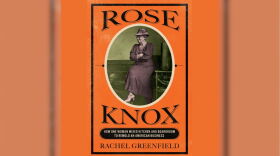 Few people know that the success of Knox Gelatin was driven by Rose Knox, the widow and pioneering businesswoman who took the reins after her husband’s death to 'mold' the company into a hugely successful American institution.
 -
 There are certainly many stories buried within the mines that established Park City, and Colleen and Don Roll are part of a group hoping to help those stories reach a new generation of hikers, bikers, and explorers with the newly-launched Park City Historic Mine Route.


