

For Arts Council of Park City and Summit County Director Jocelyn Scudder, 2026 began in a strange place.
“It was January. We had no snow, right? And we had people calling us at the arts council to be like, ‘How do we creatively activate Main Street?’ Or, ‘How do we make activities for families who booked travel here?’” Scudder said. “We're super reliant on tourism as an economy…so how do we fill this gap when the skiing isn't great?”
January was also the last Sundance Film Festival in Park City, after organizers announced the move to Boulder, Colorado, beginning in 2028.
“It was a time of intense reflection, I think, for us in the cultural sector,” Scudder said.
Between the departure of the longtime festival and Utah’s lowest-snow winter on record, Park City was verging on an identity crisis.
Scudder reflected on how synonymous the festival had become with Park City.
“I would [leave town and] say, ‘Oh yeah, I live in Park City,’ and everyone knew I was a skier, and it is one of the driving factors. But everyone would [also] say, ‘Oh yeah, Sundance Film Festival.’ It was an identity driver for us. And…what I hope this community can do is move on a little bit,” she said.
Local arts leaders have been asking, what does “moving on” look like – not only for Park City’s cultural scene, but for its economy, and its sense of self?
Although their visions vary, they all insist arts and culture will be the torch bearers for the Park City of tomorrow.
Building a destination
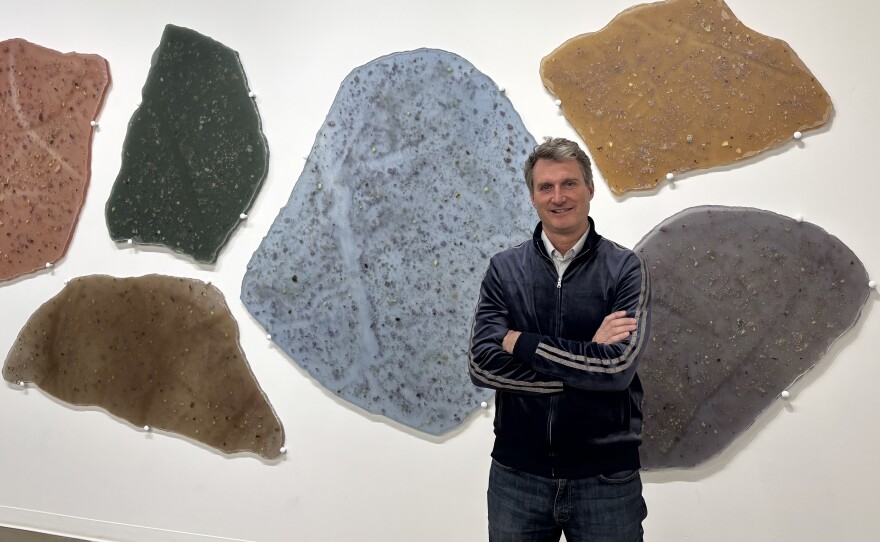
Aldy Milliken ran an internationally-known gallery in Sweden before moving into museum management. But Sundance put Park City on his cultural radar, and in 2020 he moved to town to serve as director of the Kimball Art Center.
Despite the festival's role in shaping the community, Milliken was unconcerned about its departure.
“Sundance absolutely put Park City on the cultural map,” he said. “I would argue that more people knew about Sundance internationally than knew about Park City… but I don't think Sundance is the future of Park City. The Kimball is the future of Park City, culturally. Full stop.”
By exhibiting big names in the contemporary art world and building a new exhibition and creative space near the PEAK Center (formerly the Skullcandy building), Milliken says the Kimball Art Center will become an international destination.
He recognized the process may take time and said Sundance’s evolution modeled that.

“I'm sure year 10, year 20, they were still struggling to fill seats. But something happened, and people realized that Sundance was super relevant, and that means they got more submissions, better films, better collaborating artists. And then something clicks, and then it grows into the behemoth, critical, dynamic organization it is today. We are doing that [at the Kimball Art Center],” he said.
In Milliken’s vision, cultural tourists will stream up from the Salt Lake airport as the center’s exhibitions grow more ambitious and its offerings multiply.
Strength through diversity
Other arts leaders envision something different: something homegrown. Katy Wang, the director of Park City Film, which screens art-house cinema in the Sundance tradition, said the idea of replacing the festival with a single event or institution is unrealistic, even misguided.
“So how do we diversify?” she asked. “Diversification – diversity in general – is certainly what makes us stronger, right? If we just pin it again on one big thing, what happens when that big thing goes away?”
Still, a single solution is enticing. The March announcement that Sean White’s Snow League competition would arrive in Park City in January, on a weekend historically filled by the festival, was greeted by some as a “Sundance replacement.”
Wang was skeptical.
“It's great that Shaun White's coming. Amazing,” she said. “But we need more than that. And there are certainly many of us in the community and people that come to visit this community that, when the slopes close and the sun goes down, want to engage with other people, want to engage with ideas.”
Wang said cinema offers that platform, and Park City Film is rolling out a series of genre-based festivals and expanding its programming year-round. It also plans to build up an annual festival in October. Wang envisions an ongoing chain of cultural happenings which drive tourism, but also community engagement and belonging.
The need for space, and support
Arts leaders and working artists say they need community and institutional support to deliver on their vision. And more than anything, they need space.

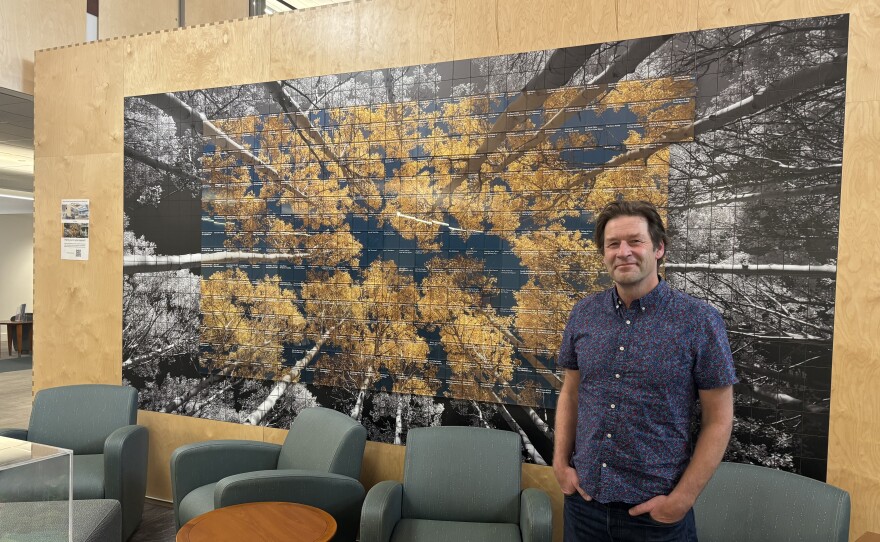
Mark Maziarz is a fine-art photographer and longtime Parkite. He recalled how excited he was in 2017 for the arts district originally proposed on the Bonanza 5-acre parcel.
As city plans have shifted toward a mixed-use development, Maziarz continues to crave something akin to the original vision.
"I would love to have a place where, when somebody comes to visit, or even people who live here, if they want to talk to an artist, go see some art being made, or see some art for sale, they know where to go. And, no matter when they go, that will happen. Nothing that's temporary or has limited hours,” he said.
Even as the vision of an arts district has been diluted in the current plan for the site, and Sundance has left the state, Scudder says the arts community does not see dead ends.
Instead, it remains confident in what it can offer a rapidly transforming Park City.
“As a community, we are in an intense place of change, I think, and we've also gone through a lot of growth, and I think we'll continue to. But from an arts leadership perspective, we're constantly ringing the bell that arts and culture is the way. It's a worthwhile investment. It helps retain who we are. It helps enhance our sense of place,” she said.
Arts leaders hope by ringing that bell, loud and clear, they’ll convince Parkites to join them.
The Arts Council of Park City and Summit County and the Kimball Art Center are financial supporters of KPCW.


